


Ethnic Groups
Vietnam’s Ethnic Tapestry – A Cultural Journey Across Regions
Vietnam is a culturally rich and ethnically diverse country, home to over 50 ethnic groups living together in harmony. Among them, the Muong, Khmer, Ede, Cham, and H’mong people each have their own unique histories, languages, cultures, beliefs, and customs. These ethnic groups not only contribute to the vibrant cultural mosaic of Vietnam but also preserve valuable traditional values that create a distinct identity and enrich the spiritual and material life of the country’s ethnic minority communities.
Below is a detailed overview of each group, including their origins, customs, traditional costumes, languages, and key economic activities.
Kinh People
-
Population & Role:Making up 86.2% of Vietnam’s population, the Kinh people represent the vast majority and play a central role in the country’s national development.
-
Customs & Social Structure: Live in villages with communal houses and bamboo groves. Betel chewing, tea drinking, and rice-based meals are common. Family headship is patrilineal; the eldest son maintains ancestral worship. Monogamy is practiced, and marriages are typically arranged by the man’s family. Multiple religions are observed, including ancestor worship, Buddhism, Confucianism, Taoism, and Christianity.
-
Culture: Rich in literature, folk music, dance, and visual arts.
-
Costume: Traditionally modest; women wear the iconic áo dài, while men formerly wore long gowns and turbans. Modern clothing follows Western-style casual wear.
-
Economy: Dominated by wet-rice agriculture supported by irrigation and dykes; also include gardening, sericulture, livestock, poultry, and pottery.
Muong People
- Population & Origin: Around 1.45 million (~1.5% of Vietnam), making them the 4th largest ethnic minority. They share ancient origins with the Kinh and live mainly in the northern provinces of Hòa Bình, Thanh Hoa, Phu Thọ, and Son La.
- Customs & Social Structure: Organized in village communities (“muông”), often patrilineal under a village leader. Traditional houses are stilted and built with four roofs
-
Culture & Language: Speak a Viet–Muong language using the Latin script. Animistic beliefs include ancestor worship and reverence for nature spirits.
-
Costumes: Women wear white blouses, colorful skirts, headbands, and silver jewelry. Men wear simple shirts and pants .
-
Economy: Primarily wet‑rice agriculture supplemented by hunting, gathering, livestock, and handicrafts (weaving, knitting). They exploit forest products and maintain low‑intensity commercial trade.
Ede People
-
Population & Region: One of the major Central Highland groups in Tay Nguyen.
-
Customs & Social Structure: Matrilineal society where land and inheritance pass through the mother’s line. The household is headed by the husband, but lineage follows maternal lines. Homes are built on stilts and communal longhouses (rong houses) are central to village life.
-
Culture & Language: Speak Ê Đê (Malayo‑Polynesian language). Known for gong‑based music ensembles and rich oral literature including epics and folktales.
-
Costumes: Distinctive woven textiles: women wear colorful skirts and patterned shawls, men sometimes wear tunics.
-
Economy: Engage in wet-rice and upland rice farming, coffee cultivation, livestock, and handicrafts like basketry and weaving.
Khmer People
-
Population & Region: The Khmer Krom in Vietnam number ~1.3% of the population. They reside mainly in the Mekong Delta (Ca Mau, Soc Trang, An Giang) .
-
Customs & Social Structure: They are primarily farmers living in riverine villages. Villages are communal and centered around Theravada Buddhist temples. Traditional Khmer houses are stilted wooden homes.
-
Culture & Language: Speak Khmer, an Austroasiatic language. Culture heavily influenced by Buddhism, rituals, and festivals like Chol Chnam Thmey (Khmer New Year). Khmer share some cognates with Vietnamese.
-
Costumes: Traditional dress includes sampot for women and sarong‑style pants for men, often brightly patterned.
Cham People
-
Population & Region: Descendants of the former Champa Kingdom. Concentrated in Ninh Thuan, Binh Thuan, and southern Central Vietnam.
-
Customs & Social Structure: Traditionally organized around village communities with leaders overseeing irrigation and agriculture. They practice both Hindu and Islamic traditions, depending on the community.
-
Culture & Language: Speak Chăm (Austronesian language). Culture includes matriarchal elements, Cham dance, religious festivals, and temple rituals.
-
Costumes: Women wear sarong‑like skirts and blouses; men wear tunics or sarong cloth. Islamic Cham communities use modest dress.
-
Economy: Skilled in irrigated agriculture (rice, fruits), fishing, weaving (textiles and brocades), and incense-making.
H’Mong People
-
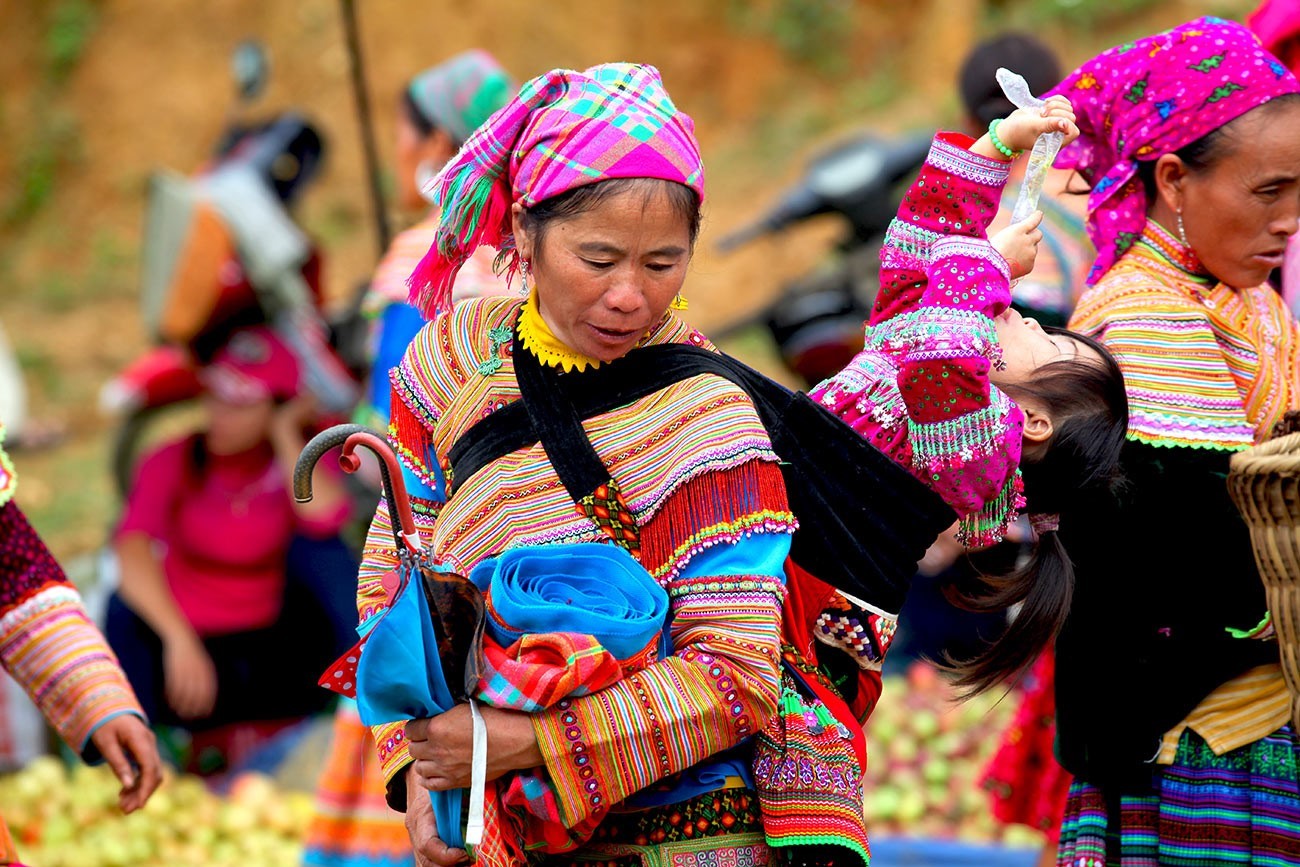
Population & Region: Around 1.45% of Vietnam’s population, living in highland regions at elevations between 700–2,000 m, especially in the Northwest.
-
Customs & Social Structure: Patrilineal clans with elders and leaders governing villages. Known for rich tradition of embroidery, festivals, and ritual sacrifices.
-
Culture & Language: Speak H’Mông (Hmong–Mien family). They celebrate Lunar New Year (Gàh Tsa) and Shamanic rituals.
-
Costumes: Brightly embroidered traditional outfits; women wear pleated skirts, indigo jackets, and intricate silver jewelry. Men wear tunics with red/white bands.
-
Economy: Practice upland rice cultivation, medicinal plant gathering, sheep and cattle raising, and handicrafts including textiles and silverwork.
Dao People
-
Population & Origin: Over 400,000 (0.65%). Speak a Mèo–Dao language and migrated from China between the 12th and early 20th centuries, tracing ancestry to legendary Ban Ho. Mostly reside in highlands (700–1,000 m) in Hà Giang and Tuyên Quang.
-
Customs & Family Life: Ancestor worship is central. Some communities practice permanent or temporary matrilocal residence. Funeral customs may include cremation for those over the age of 12. Homes range from stilted to ground-level.
-
Culture & Language: Use Dao Demotic Script (Chinese characters pronounced in Dao).
-
Costume: Men wear trousers and short vests; women’s clothing is richly decorated with traditional motifs.
-
Economy: Rice cultivation, subsidiary crops, and sideline trades like weaving, carpentry, blacksmithing, papermaking, and oil production.
Thai People
-
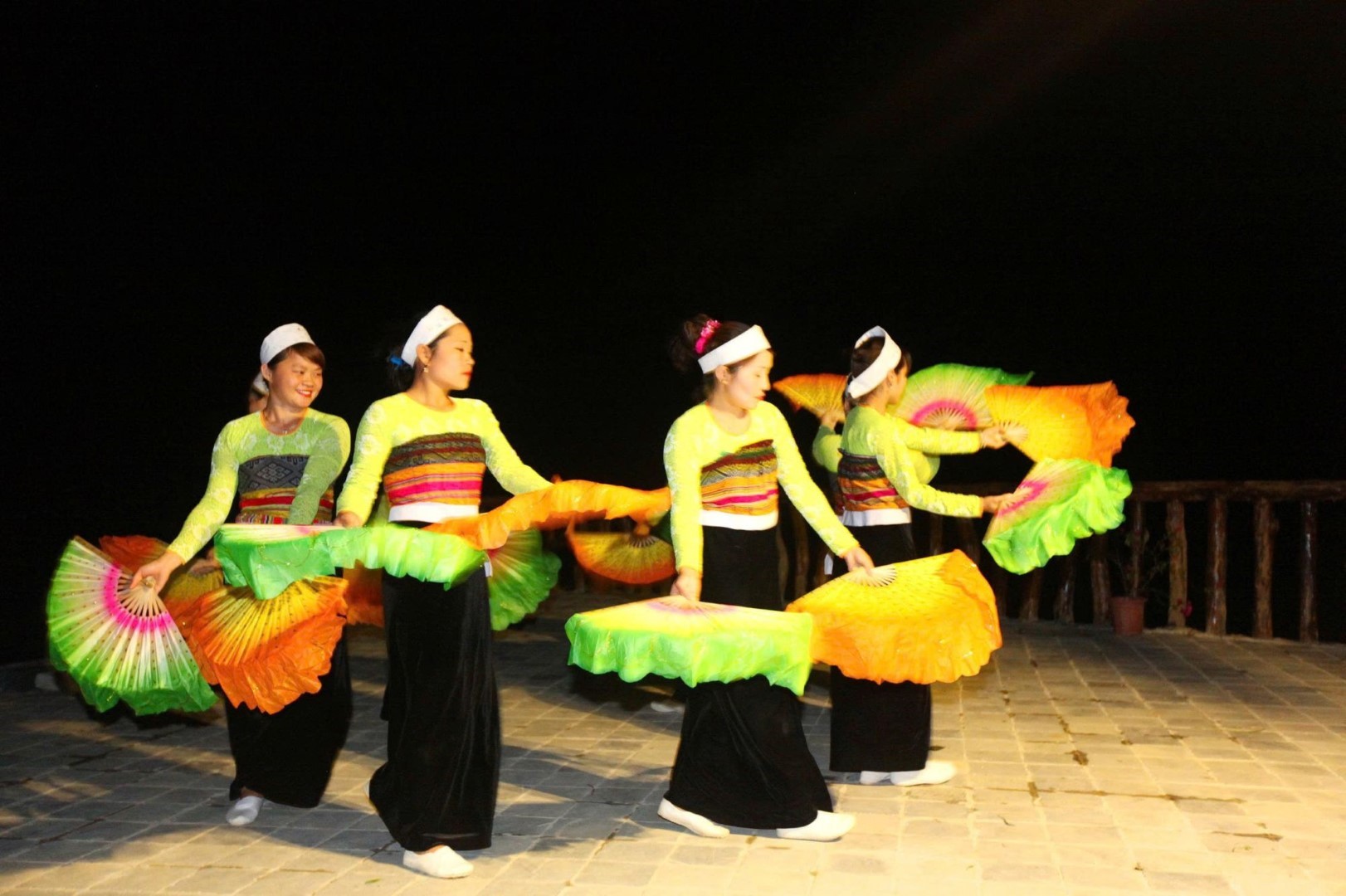
Population & Regions: ~900,000 (1.45%), divided into White Thai (Thai Trang) and Black Thai (Thai Den). Reside in valleys like Mường Thanh, Quảng Huy, Than Uyên, Nghĩa Lộ, and parts of Nghệ An.
-
Culture & Festivals: Use their own script and have a vibrant cultural life. A distinctive tradition is the Cave-Picnicking Festival (Tết Thăm Caves) in early lunar year, a courtship ritual held in dark caves. Participants seek partners by navigating caves by touch only, with strict communal rules.
-
Economy: Practice wet-rice agriculture, livestock rearing, weaving, and handicrafts.
Hoa People
-
Population & Origin: About 1 million, ~1.8% of Vietnam’s population. Chinese migration began in the 15th century, with major influxes in the late Minh and early Thanh dynasties and during the 19th century. Today, most Hoa are naturalized and reside primarily in Chợ Lớn (Ho Chi Minh City), Cần Thơ, Kiên Giang, Đà Nẵng, Hà Nội, Hải Phòng, Quảng Ninh, among others.
-
Customs & Family Life: Live in closely-knit lineage-based households, typically three-room homes. Families follow patrilineal inheritance; the eldest son inherits the majority. Early, arranged marriages are common, often based on social or business interests. Funeral rituals are elaborate and emphasize veneration of the dead through temples and shrines.
-
Culture & Language: Speak a Chinese-based Han language. Traditional male costume resembles that of Nùng and Mông, while women wear five-paneled vests, short-sleeve shirts, and trousers.
-
Economy: Engage in agriculture, handicrafts, trade, fishing, and salt-making. Many serve as laborers, educators, or government professionals; historically, they dominated southern commercial sectors.
Together with the previously described groups—Hoa, Dao, Kinh, Thai—these communities illustrate the rich ethnic and cultural tapestry of Vietnam, each with unique traditions, languages, and livelihoods.
Our Offices
|
Hanoi Head Office: 87 Hoang Quoc Viet Street, Hanoi, Vietnam Tel: +84 24 38364212 / +84 24 37568868 Email : [email protected] Whatapps: +84904488850 |
Hochiminh City Office: 126 Nguyen Thi Minh Khai Street, District 3,Hochiminh City Email : [email protected] Tel: +84 28 38333388 |

Contact Us