


Best Time to Visit Vietnam October: Weather, Rice Harvest & Where to Go
Best time to visit Vietnam October? Find out where the weather works, when rice fields turn gold, and which regions need extra planning.
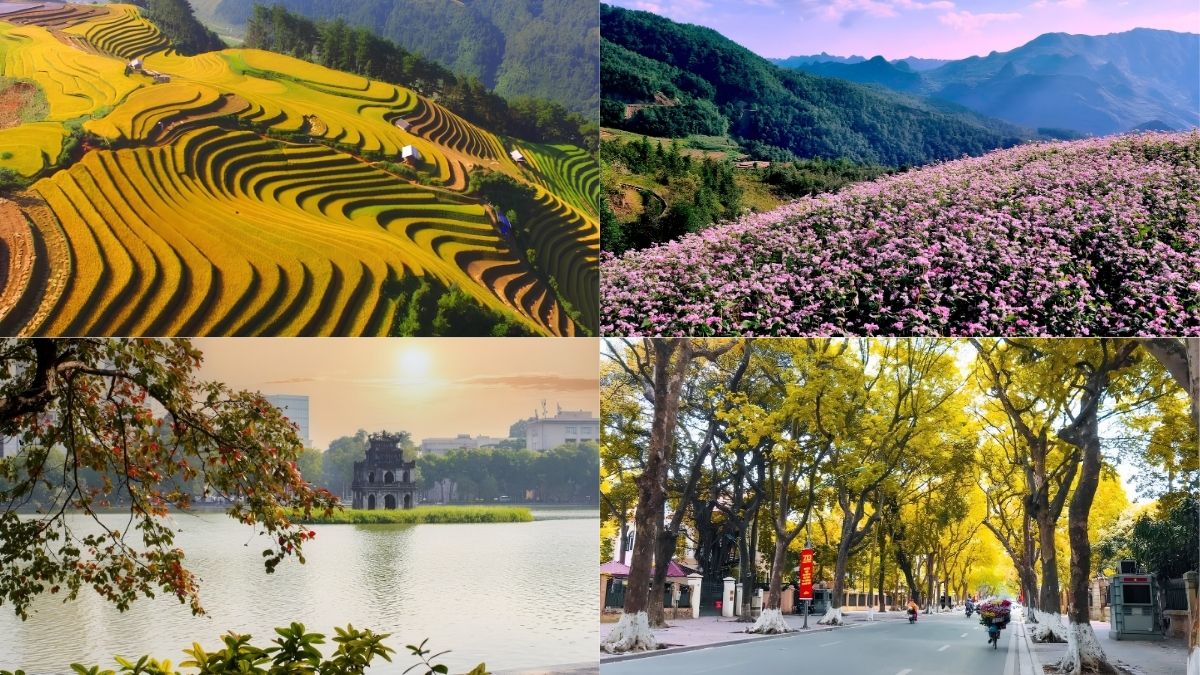
October can be a great time to visit Vietnam, but the experience varies sharply from north to south. Northern Vietnam is cool and dry enough for rice harvests and mountain trips, while the south enters its floating season; central Vietnam, however, sees frequent heavy rain and possible flooding. Knowing these regional differences helps you choose where to go and plan around the weather.
Is October a good time to visit Vietnam?
Yes, October can be an excellent time to visit Vietnam, especially if the trip focuses on the North or South. Northern Vietnam brings cooler weather, golden rice terraces, and the first buckwheat flowers, while the Mekong Delta enters its seasonal flood period. Central Vietnam is the main exception: October falls within its wettest and stormiest period, so heavy rain and flooding can affect travel plans.
The key is to think of October by region rather than as one nationwide season. A trek through Mu Cang Chai or Ha Giang can have completely different conditions from a few days in Hoi An, while the Mekong Delta offers its own seasonal landscape in the south. The table below shows what October looks like across Vietnam and which types of trips fit each region.
Vietnam in October at a glance:
|
Region |
October Weather |
Seasonal Highlight |
Best Suited For |
|
North |
Cool and pleasant |
Autumn, golden rice, buckwheat flowers |
Trekking, road trips, nature |
|
Central |
Heavy rain, storm risk |
Cuisine, heritage, caves |
Cultural trips, food, indoor experiences |
|
South |
Warm, gradually turning drier |
Flood season, floating markets, southern beaches |
Mekong Delta, floating markets, islands |
 October is a beautiful time to visit Vietnam’s northern mountains, when terraced rice fields turn golden before the harvest (Source: vietnam.vn)
Vietnam's October weather changes completely from North to South
The single biggest mistake when planning the best time to visit Vietnam October is applying one weather assumption to the whole country. Vietnam stretches over 1,600 km from north to south, and in October that distance translates into three genuinely different climates operating at the same time.
The North: Crisp air and a landscape turning to autumn
October is when northern Vietnam finally feels comfortable outdoors again. Hanoi and Ninh Binh typically see daytime temperatures of around 25-29°C, while nights fall to roughly 18-23°C, with lower humidity and clearer mornings than the hotter months (Source: Vietnam Tourism). It is warm enough for a full day of walking, but cool enough that a morning around Hoan Kiem Lake or an afternoon exploring Ninh Binh does not feel like a battle against the heat.
 October is a pleasant time to visit Ninh Binh, with cooler weather and less intense heat (Source: bvhttdl.gov.vn)
The higher you travel, the more noticeable the change becomes. In Sapa and Ha Giang, temperatures can drop to around 12-20°C, with early mornings sometimes reaching 12-15°C at higher elevations. Sunrise departures and mountain passes can feel genuinely cold, so a proper warm layer is worth packing. Mai Chau and Pu Luông sit between the lowlands and high mountains, staying around 24-28°C during the day and cooling to 16-20°C at night.
What makes October particularly appealing is the transition itself. The sticky summer air has eased, the mornings feel sharper, and the landscape starts to take on the muted colors of autumn. For travelers considering the best time to visit Vietnam October, the North offers the kind of weather that makes slow travel: walking, cycling, trekking, and spending time outdoors feel effortless.
Central Vietnam: More rain than beach weather
October is the month when Central Vietnam turns from a beach destination into a weather gamble. Hue, Da Nang, and Hoi An are deep into the rainy season, with temperatures around 22-28°C and monthly rainfall commonly reaching 300-500 mm (Source: Vietnam Tourism). Heavy rain can last for hours or return over several days, while tropical storms can bring flooding and disrupt roads, flights, and outdoor plans.
 Hue, Da Nang, and Hoi An are deep into the rainy season (Source: Bao Lao Dong)
That does not make the region off-limits. It simply changes what October is good for. Hue's imperial sites, Hoi An's food, cafés and tailor shops, cooking classes, and Phong Nha's caves can all work when the beach does not. Phong Nha is particularly useful on wet days: underground temperatures in the cave systems stay around 20-22°C year-round, largely unaffected by the weather outside.
 Phong Nha takes on a quieter beauty on rainy days (Source: vietnam.vn)
If Central Vietnam is part of an October itinerary, leave room for plans to move rather than filling every day with fixed outdoor activities. Check storm conditions before travelling and keep beach days flexible, the difference between a good October trip here and a frustrating one can be as simple as having a spare day when the rain arrives.
The South: Still hot, but starting to turn
Southern Vietnam stays hot in October, with temperatures generally around 26-32°C. Ho Chi Minh City and the Mekong Delta are still in the wet season, but rainfall is gradually easing as the region moves toward its drier months. Showers often arrive in short afternoon bursts rather than the prolonged rain more common in Central Vietnam, leaving plenty of time for outdoor activities between downpours.
 The Mekong Delta is still in the wet season (Source: Bao Tuoi Tre)
The Mekong Delta is where October feels most distinctive. Seasonal floodwaters are rising across parts of the delta, bringing more water into canals and fields and shaping the local rhythm of floating markets, boat trips, fishing, and seasonal produce. It is a very different side of southern Vietnam from the dry-season city and beach itinerary.
Phu Quoc is beginning a different transition. Rainfall starts to decline and temperatures remain around 30°C, so beach conditions gradually improve as the island moves toward its December-March dry-season peak. October is still a transitional month, but the shift is already noticeable.
 Phu Quoc in October as the island transitions from rainy weather to clearer, drier beach days (Source: Bao Thanh Nien)
Read more: Best Time to Visit Vietnam in June: Weather, Festivals & Where to Go
Two experiences you can only have in Vietnam in October
Before the weather breakdown, it's worth knowing what's actually on the table, because these two events are the real reason experienced travelers circle October on the calendar rather than November or March.
The golden rice harvest: The North's biggest draw this month
If there's one single reason travelers specifically time a trip around the best time to visit Vietnam October, it's this. Mu Cang Chai and Hoang Su Phi turn a deep, saturated gold as their terraced rice fields reach harvest, with entire hillsides shifting color almost overnight once the season hits its peak. It's the kind of landscape that photographs well from a distance and feels even better walking directly through it, past farmers cutting stalks by hand exactly as their families have for generations.
 Hoang Su Phi turn a deep, saturated gold as their terraced rice fields reach harvest (Source: Vietjetair)
Ha Giang adds a second, overlapping layer to the same trip: the province's famous buckwheat flowers begin their early bloom right as the rice harvest peaks, meaning a single Ha Giang Loop route can catch both golden terraces and the first lavender-pink buckwheat fields in the same few days. Entry to specific viewing spots is genuinely inexpensive, the Sung La valley runs around 30,000 VND per person, and smaller viewpoints near Lung Cu Flag Tower or Ma Pi Leng Pass are typically 10,000-25,000 VND (Source: Vietnam Airlines).
It is also worth renting a traditional brocade outfit for 50,000-100,000 VND: for a relatively small cost, you get to step into the local scenery in traditional dress and take home a set of memorable photos from the trip. Buckwheat cake and buckwheat wine along the route cost very little by comparison.
Because this overlap of rice and early buckwheat season is genuinely narrow, it's also genuinely popular, booking a Ha Giang Loop trip well ahead of an October departure matters more than for almost any other month on the calendar, since accommodation and guided tours here fill up fast once word gets around that both seasons are peaking together.
 Ha Giang's buckwheat flower season (Source: Bao Tuyen Quang)
The Mekong Delta's flood season
Further south, October falls in the Mekong Delta's flood season, the annual flood season that typically runs from September through November, when rising water spreads across rice fields, canals, and low-lying parts of the delta. Rather than shutting the region down, the extra water brings the Mekong to life: canals run fuller, boats carry more seasonal produce, and fish and freshwater shrimp become a bigger part of local markets and meals.
The difference is easiest to feel early in the morning. Around places such as Cai Rang Floating Market near Can Tho, boats gather with pineapples, dragon fruit, rice, and other produce, while vendors move between vessels as the river traffic builds. In Chau Doc and other parts of the delta, seasonal linh fish and freshwater catches also appear more prominently on local menus. With the mist still hanging over the water and boat engines starting up around you, October offers a side of the Mekong that largely disappears when the floodwaters recede.
 The Mekong Delta's flood season (Source: Vietjetair)
For travelers trying to combine the northern rice harvest with the Mekong's flood season, the timing is unusually convenient: two very different seasonal landscapes are at their most distinctive within the same month. Sinh Cafe can arrange the transport and tours needed to connect these regions, making it easier to build a northern rice-harvest route and a Mekong Delta leg into one October itinerary without having to coordinate every connection separately.
Festivals and cultural events worth traveling for in October
Festival timing is often the deciding factor that tips the best time to visit Vietnam October from "good weather" into a genuinely memorable trip, particularly for travelers with any flexibility in their exact travel dates.
Kate festival: The Cham community's biggest annual celebration
Katê Festival is the single largest annual festival of the Cham community, honoring ancestors and deified kings including Po Klong Garai and Po Rome. It's held at sacred sites including Thap Po Klong Garai and Thap Po Rome in Ninh Thuan, and at the Po Sah Inu Cham towers in Binh Thuan, a rare chance to witness Cham religious and cultural practice up close rather than through a museum display.
 Kate Festival (Source: dantocphattrien.vietnamnet.vn)
Don-ta and Bay Nui Ox-Racing Festival: An Giang's Khmer Tradition
Đon-ta Festival and the Bay Nui Ox-Racing Festival bring a completely different energy to An Giang, where the Khmer community's traditional ancestor-honoring ceremony coincides with a genuinely thrilling ox-plowing race, dozens of paired oxen charging through flooded rice paddies while crowds cheer from the banks. It's raw, loud, and about as far from a staged tourist show as a festival gets.
 Don-ta and Bay Nui Ox-Racing Festival (Source: en.qdnd.vn)
Dinh Cau and Dinh Ba Festivals: Phu Quoc's local spiritual traditions
Dinh Cau and Dinh Ba Festivals round out the month on Phu Quoc, tied to local spiritual traditions honoring the island's guardian deities. For travelers already planning beach time on Phu Quoc, timing a visit around one of these festivals adds a layer of local culture that a standard beach itinerary otherwise misses entirely.
Between the rice harvest, the flood season, and these three festivals, October offers enough genuinely distinct experiences that the question isn't really whether it's the best time to visit Vietnam October, it's which of these experiences to build the trip around.
 Dinh Cau and Dinh Ba Festivals (Source: Vietnam Airlines)
Tips for traveling in Vietnam during October
Packing for October means preparing for three very different climates. Pack according to the regions on your itinerary rather than treating Vietnam as uniformly hot:
- North and Sa Pa: Bring a proper warm layer, such as a fleece or light down jacket. Dawn temperatures in the mountains can fall to around 12°C.
- Central Vietnam: Pack a waterproof rain jacket and quick-dry shoes. Heavy rain can leave streets and paths wet for hours.
- South and Phu Quoc: Lightweight clothing and sun protection are enough for most days, but keep a compact umbrella for afternoon showers.
A few checks before each trip can also save you from avoidable disruptions:
- Check the weather forecast before travelling through Central Vietnam. Conditions can change quickly during the rainy season, particularly when storms are approaching. Check the latest forecast and local warnings rather than relying on information from several days earlier.
- Book a Ha Giang tour early. The rice harvest and early buckwheat-flower season overlap for a relatively short period, making this one of the busiest times to travel the Ha Giang Loop.
- Confirm your Mekong Delta boat tour before heading to the pier. Flood-season water levels can affect specific routes and boat access from day to day, so confirm the departure point and itinerary in advance.
- Ask about the operator's storm policy for Central Vietnam. Find out whether the tour can be cancelled, rebooked, or adjusted if heavy rain or a tropical storm affects the route.
- For the Ha Giang Loop, ask about road conditions and guide experience. Mountain passes such as Ma Pi Leng can become more difficult to travel in wet weather.
- For Mekong boat trips, ask whether the route can change with water levels. A flexible itinerary is useful during the flood season, when local conditions can vary from one day to the next.
The biggest mistake is building a fixed north-to-south itinerary with no room for weather changes in Central Vietnam. Leave two or three flexible days around Hue, Đa Nang, and Hoi And so a beach day can be replaced with a cultural or indoor activity if heavy rain arrives. The North and South can usually follow a tighter schedule, while Central Vietnam benefits from more flexibility.
This is where a local operator can make an October itinerary easier to manage. Sinh Cafe Travel can help arrange the northern and Mekong legs of your trip, from the Amazing North of Vietnam 6 Days 5 Nights to the Ben Tre Riverside Journey 2 Days 1 Night. Choose the route that fits your October plans and let the transport and tour arrangements be handled along the way.
 Sinh Cafe offers tours across Vietnam, from the northern mountains to the Mekong Delta
FAQs
Is October the best time to visit Vietnam overall?
It depends on the region. October is excellent for the North, stormy in Central Vietnam, and transitional in the South.
Is October the rainy season in Central Vietnam?
Yes. October is one of the wettest and stormiest months in Central Vietnam.
Is it safe to visit Hoi An or Da Nang in October?
Yes, but stay flexible. Heavy rain and storms can disrupt outdoor plans and transport.
Is October a good time to visit Phu Quoc?
It's a transitional month. Rainfall is easing, but the dry season has not fully arrived.
When does Ha Giang's flower season start?
Early buckwheat flowers typically appear in October, overlapping with the rice harvest.
Should I avoid the Mekong Delta during flood season?
Not necessarily. Flood season brings distinctive scenery and seasonal produce, but boat routes should be confirmed in advance.
Share via


Related articles
Visit Ha Giang in November: Is it a good time to go?
Posts | 21/09/2026

Ha Long bay 1 day tour: Best itinerary, cruise options & Travel tips
Posts | 23/03/2026

Yang Bay Waterfall: A Hidden Paradise near Nha Trang you shouldn’t miss
Blog | 24/03/2026

Diep Son island: Walk across the sea in Vietnam’s hidden paradise
Posts | 24/03/2026







There are no reviews yet