


Vam Sat Mangrove Forest: A Guide to Its Wildlife and Wetland Ecosystem
Vam Sat mangrove forest is more than green waterways and Monkey Island. See how its mangroves, mudflats, tides and wildlife come together.
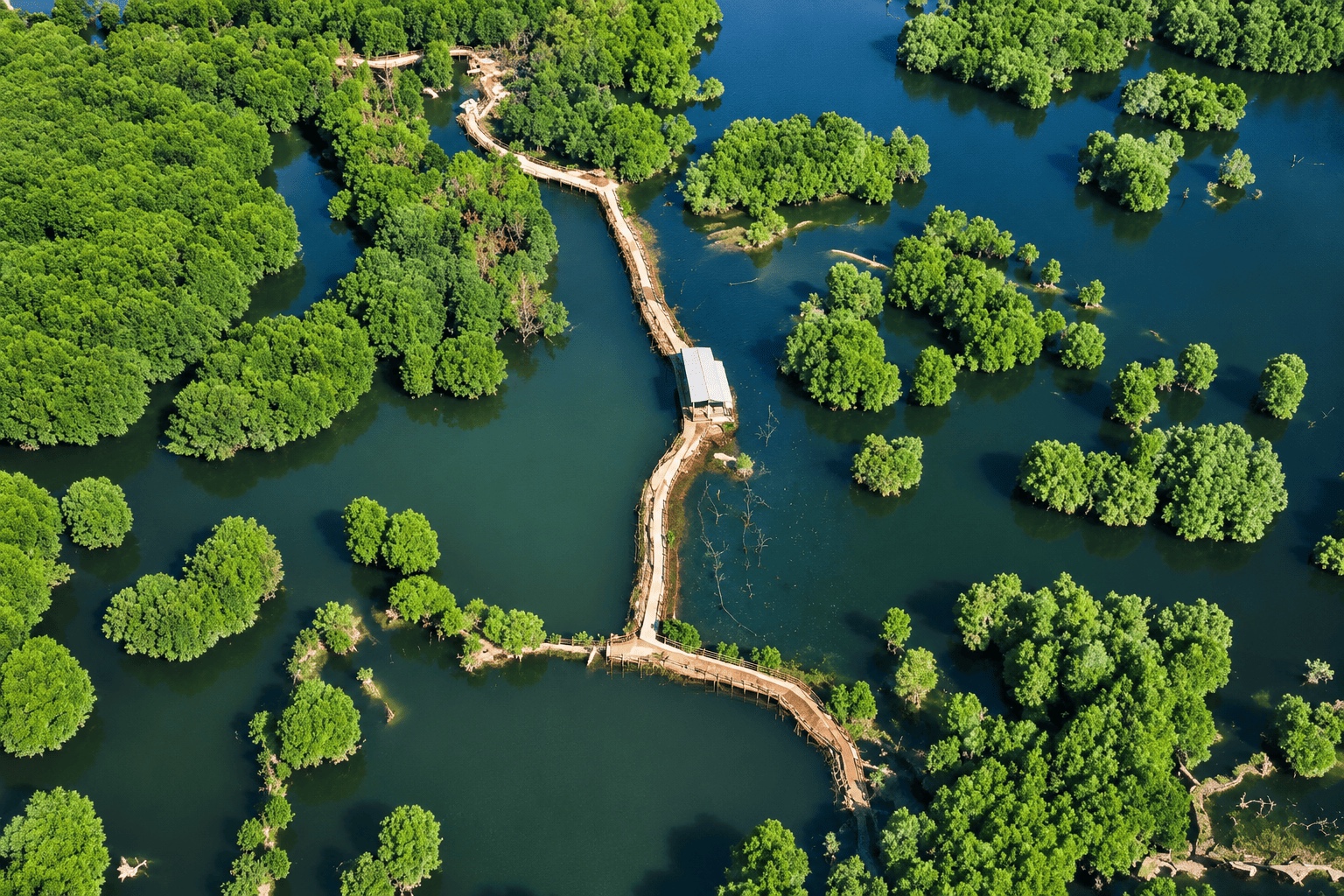
Vam Sat mangrove forest is a 2,000-hectare ecotourism area in Can Gio, Ho Chi Minh City, within the wider 75,740-hectare Can Gio Mangrove Biosphere Reserve. It is known for its dense mangrove forests, tidal waterways, mudflats and diverse wildlife, including long-tailed macaques, crocodiles, fiddler crabs and waterbirds.
Where is Vam Sat mangrove forest?
Vam Sat mangrove forest is located in Ly Nhon Commune, Can Gio District, Ho Chi Minh City, Vietnam, within the wider Can Gio Mangrove Biosphere Reserve. The Vam Sat ecotourism site is specifically located in Sub-zone 15A, an area known for its tidal channels, mangrove forests and wetland habitats.
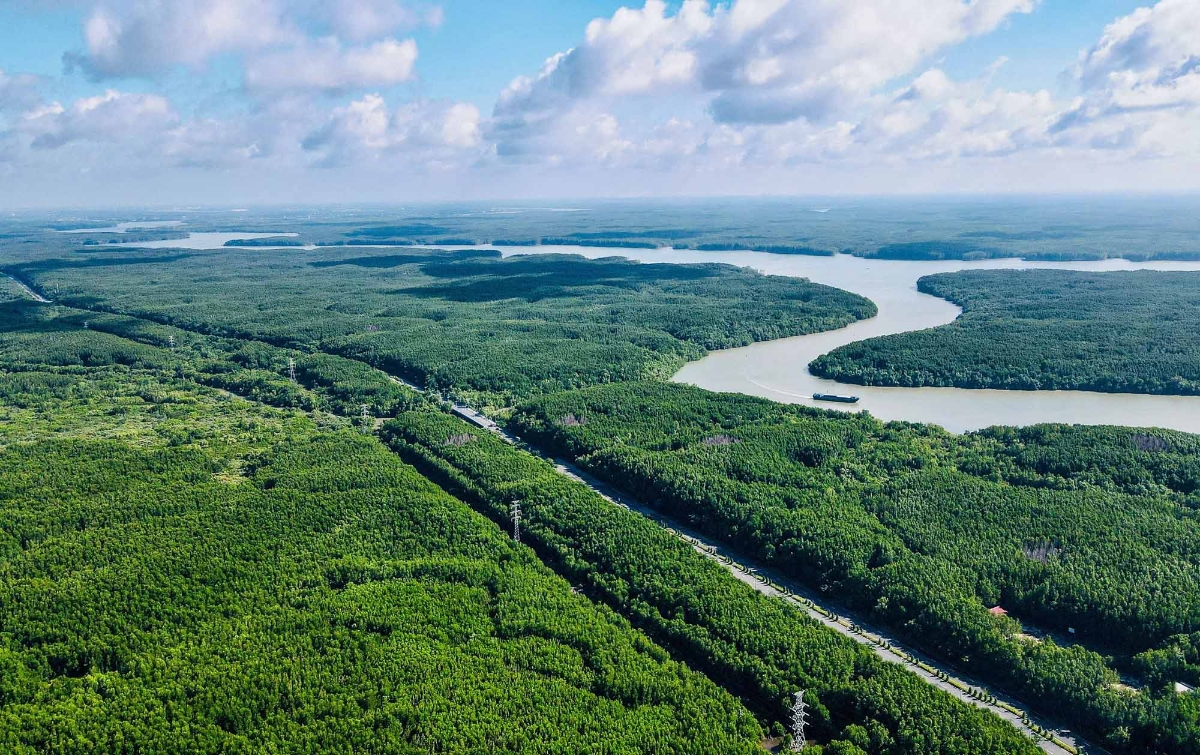
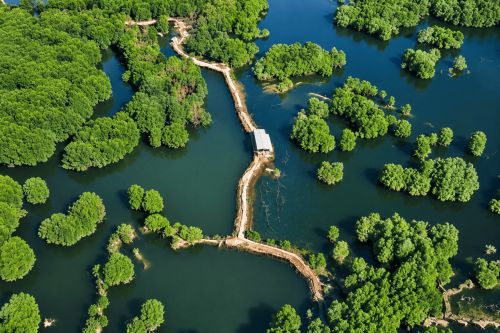
Aerial view of the sprawling Can Gio Mangrove Biosphere Reserve and riverways (Source: VnEconomy)
You may also see Vam Sat mentioned under other names, including Can Gio Mangrove Forest and Rung Sac. These names can sometimes be used interchangeably when referring to the mangrove area, although they do not always describe exactly the same site. Vam Sat is one of the areas that visitors can access and explore within the wider Can Gio mangrove ecosystem.
The wider Can Gio Mangrove Biosphere Reserve covers about 75,740 hectares. UNESCO recognized Can Gio as a Biosphere Reserve in 2000, highlighting the ecological importance of this large wetland area. This means Vam Sat is not an isolated forest or simply a tourist attraction, but part of a much larger mangrove ecosystem that supports diverse plant and animal life.
Read more: Can Gio Day Trip from Ho Chi Minh City: Complete Guide 2026
Wildlife in Vam Sat mangrove forest
Vam Sat mangrove forest supports wildlife across its trees, tidal channels and exposed mudflats. Monkeys are among the most visible animals, while smaller crabs, fish and waterbirds play less noticeable but important roles in the wetland food web.
Long-tailed macaques on Monkey Island
Long-tailed macaques are medium-sized monkeys known for their slim bodies, greyish-brown fur and especially their long tails, which can be as long as or longer than their bodies. Their long, flexible tails help them keep their balance when climbing and moving between branches. They are also agile climbers and can move easily between trees, the forest floor and waterways.
At Vam Sat, long-tailed macaques are among the easiest animals to spot, especially on Monkey Island. They live in groups along rivers and canals, moving between trees and the forest floor as they search for food. Their diet is varied, including fruits, leaves, seeds, insects and small aquatic animals. Studies in Can Gio have recorded macaque groups of around 30–40 animals, showing their ability to live in the restored mangrove habitat.
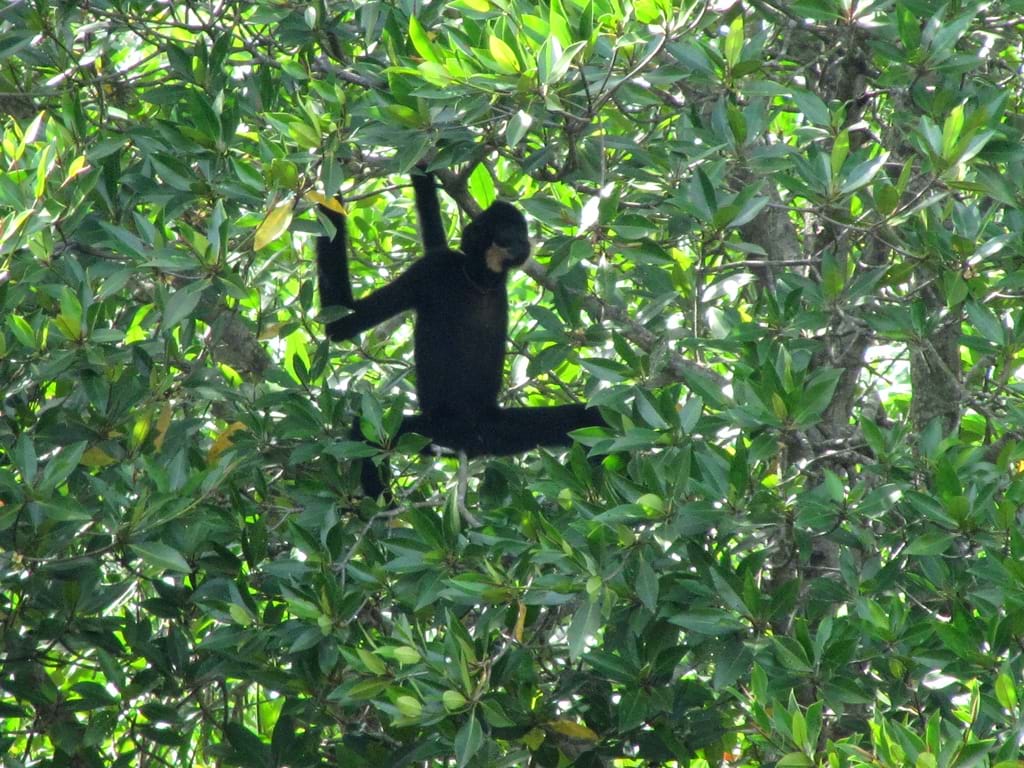
Long-tailed macaques adapted to the restored mangrove habitat on Monkey Island (Source: MIA.vn)
The macaques are also well known for being comfortable around people. Regular contact with visitors has made some groups less wary of humans, and individual monkeys may approach paths or tourist areas when they expect food. Visitors should avoid feeding them, as human food can change their natural feeding behaviour and may lead to unwanted interactions.
Crocodiles: a close-up encounter in the mangroves
Crocodiles are one of the more unusual animals associated with a visit to Vam Sat. Unlike the smaller creatures that visitors may notice naturally along the mudflats, crocodiles are large predators that immediately stand out because of their size, powerful jaws and heavily scaled bodies.
At Vam Sat, visitors can observe crocodiles in a managed crocodile area, where the animals can be seen much more closely than would normally be possible in a wild mangrove setting. This makes the experience different from ordinary wildlife watching: you can observe their slow movements, basking behaviour and powerful bodies at close range without having to search the open waterways for a wild crocodile.
 Visitors observing crocodile feeding activities from a secure floating platform at Vam Sat (Source: MIA.vn)
The crocodile experience should therefore be understood as a controlled wildlife attraction, rather than evidence that visitors will regularly encounter crocodiles swimming freely through Vam Sat's tourist routes.
Fiddler crabs, mudskippers and life on the mudflats
Some of Vam Sat's most interesting wildlife is much smaller. When the tide moves out and mudflats are exposed, fiddler crabs and mudskippers become easier to spot. They may not attract attention from a distance, but watching them closely reveals how active the mangrove floor can be.
Fiddler crabs are particularly easy to recognize because males have one oversized claw, which can be much larger than the other. They use their claws in displays and interactions with other crabs, while their burrows create small openings across the soft mud. Look closely around the edges of the mudflats and you may see them quickly disappearing into their holes when people approach.
Mudskippers are even more unusual because they are fish that can spend time out of water. Their ability to move across wet mud and tolerate low-oxygen conditions allows them to use parts of the mangrove that ordinary fish cannot. During a low tide, visitors may see them wriggling, hopping or resting on the mud near shallow channels.
These small animals also make the mudflats worth observing rather than simply walking past them. Their burrows, feeding marks and movements provide visible signs of life on the forest floor.
Waterbirds along the tidal channels
Birdwatching at Vam Sat is less about seeing one spectacular species and more about watching different birds use different parts of the wetland. Herons and egrets may stand in shallow water waiting for fish, kingfishers can be seen around waterways, while larger storks and other waterbirds use the trees, mudflats and open areas.
The tidal channels are particularly useful places to watch birds because the changing water level constantly exposes new feeding areas. At low tide, shorebirds can gather on exposed mud to search for small crabs, mollusks and other invertebrates. When the tide rises, fish and other aquatic animals become more active in the channels.
 Waterbirds nesting across the dense canopy of the Can Gio bird sanctuary (Source: MIA.vn)
Early morning is a practical time for birdwatching, when the forest is quieter and birds are often active around feeding areas. Bring binoculars if you want to identify smaller or more distant birds rather than relying only on what can be seen from the main paths.
Read more: Dong Thap travel for photographers: Discovering the Mekong Delta beyond the usual shots
How to experience Vam Sat mangrove forest
Seeing the mangrove from the water gives a clearer sense of how its trees, channels and mudflats fit together. A good visit also leaves time to look beyond the most famous attractions and pay attention to the smaller wildlife shaped by the tides.
Follow the mangrove channels by boat
A boat ride is one of the simplest ways to see how the mangrove is structured. Moving through the narrow channels, you can see tangled roots along the banks, muddy areas exposed by the tide and birds using the trees or shallow water. Can Gio has a dense network of rivers and canals, with tidal flats forming an important part of the wider wetland.
 Exploring narrow tidal channels and root ecosystems by boat in Vam Sat (Source: vamsat.vn)
The experience is not only about getting from one attraction to another. Being on the water brings different parts of the ecosystem into view at the same time: roots provide shelter, channels carry tidal water, and mudflats create feeding areas for fish, crabs and birds.
See the wildlife beyond Monkey Island
Monkey Island may be the most obvious wildlife stop, but it represents only one part of the mangrove ecosystem. Look closer at the edges of the water and exposed mud, where mudskippers, crabs and small fish are easier to notice. The wider Can Gio wetland also supports many waterbirds and migratory shorebirds.
It is also worth distinguishing wildlife living naturally in the mangrove from animals kept in managed facilities. Macaques can be encountered around the forest and tourist areas, while crocodiles seen at attractions such as Vam Sat are associated with a managed crocodile area rather than routine encounters with wild crocodiles in the channels.
Time your visit around tides and seasons
The tide can change what you see in the same stretch of mangrove. Lower water exposes mudflats where crabs and mudskippers become easier to spot, while higher water covers much of this habitat. Can Gio has a semi-diurnal tidal regime, meaning the area experiences two tidal cycles each day.
Season also matters, particularly for birdwatching. Can Gio supports both resident and migratory birds, with mudflats and sandbanks providing important habitat for migratory shorebirds. Recent surveys recorded differences in bird abundance and diversity between seasons, although the study did not find those differences to be statistically significant overall.
 Migratory birds flying over intertidal mudflats during early morning or late afternoon (Source: Bao Quan doi nhan dan)
Early morning or late afternoon is a practical time for birdwatching, when the light is softer and wildlife activity can be easier to observe. Rather than relying on a fixed “best month,” checking the tide and choosing a quieter time of day can make the experience more rewarding.
Read more: Xeo Quyt Ecotourism: A 2-Hour journey between melaleuca forest and a revolutionary base
Practical information for visiting Vam Sat
A visit to Vam Sat depends on the weather, tides and activities included in your itinerary. Knowing the basic costs and conditions in advance also makes it easier to choose how much time to spend in the mangrove.
When is the best time to visit?
The best time depends on what you want to see. October to March is a useful period for birdwatching because migratory birds may be present in the mangrove wetland. Early morning and late afternoon are also suitable times to watch birds, when temperatures are lower and wildlife is generally more active.
Weather is another factor, December to April is generally drier, making outdoor activities more comfortable and reducing the chance of muddy paths after rain. Tide levels can also change what you see. During low tide, mudflats become exposed and animals such as fiddler crabs and mudskippers are easier to spot.
How to get to Vam Sat and plan your visit
Vam Sat can be visited as a day trip from Ho Chi Minh City, with the journey usually taking around 1.5 - 2 hours by road, depending on traffic and the route. Some routes include a ferry crossing before reaching the Can Gio mangrove area, while travelling between attractions can also take time because the area is spread across rivers, tidal channels and separate activity sites.
A full day is enough to combine a boat trip through the mangrove channels with visits to Monkey Island and the crocodile area. A longer stay around the waterways can be worthwhile when wildlife is the main interest, as mudskippers, crabs, fish and waterbirds are easier to notice when you take your time rather than move quickly between attractions. An observation tower offering panoramic views over the Vam Sat mangrove canopy (Source: MIA.vn)
Entrance fees and activity prices
The cost depends on which attractions and activities you include. Based on the available price list, the main entrance and sightseeing services include:
|
Service |
Price |
Notes |
|
Entrance ticket (road access) |
60,000 VND/person |
Includes ecological shuttle transport |
|
Crocodile Swamp shuttle (round trip) |
20,000 VND/person |
Minimum 2 guests |
|
Crocodile fishing cage boat |
60,000 VND/person |
Minimum 2 guests |
|
Tram Chim sightseeing shuttle (round trip) |
20,000 VND/person |
Minimum 2 guests |
|
Bird sanctuary visit |
55,000 VND/person |
May - October |
|
Bat Swamp rowing boat |
65,000 VND/person |
|
|
Wooden boat to Bat Swamp (round trip) |
85,000 VND/person 75,000VND/person 55,000 VND/person |
9 - 16 guests 17 - 24 guests 25 - 30 guests maximum 2 hours |
|
Canoe to Bat Swamp (round trip) |
185,000 VND/boat |
Maximum 3 guests; 1 - 2 guests pay the same rate |
What to bring for a mangrove visit
A few less obvious items can make a difference when spending several hours around the mangrove channels and wildlife areas:
- A waterproof phone pouch or dry bag - protects phones, cameras and other belongings from splashes during boat trips.
- Binoculars - allow you to watch birds across tidal channels and mudflats without getting too close.
- Extra socks or a small towel - come in handy after walking through damp areas or getting splashed on a boat.
- A zippered bag for food and small belongings - keeps food and personal items out of easy reach of macaques around Monkey Island.
- Insect-repellent patches or roll-on repellent - easier to reapply while moving between boats, forest paths and outdoor areas.
Planning a trip from Ho Chi Minh City? Explore Vam Sat and the Can Gio mangrove forest with Sinhcafe, or browse more day trips from Saigon to make the most of your time in southern Vietnam.
FAQs
Can I visit Vam Sat mangrove forest independently?
→ Yes. Some areas have separate entrance fees and boat services.
Is Vam Sat suitable for children?
→ Yes, but children should stay close to adults around Monkey Island.
Are there many mosquitoes in Vam Sat?
→ Yes, especially around dense vegetation and tidal channels.
Can I swim in the mangrove forest?
→ No. Swimming is not part of the usual activities.
Can I see wildlife without visiting Monkey Island?
→ Yes. Crabs, mudskippers, fish and birds can be seen around the mangrove.
Is Vam Sat suitable for bird photography?
→ Yes. Binoculars or a telephoto lens can help you observe birds from a distance.
Share via


Related articles
Visit Ha Giang in November: Is it a good time to go?
Posts | 21/09/2026

Ha Long bay 1 day tour: Best itinerary, cruise options & Travel tips
Posts | 23/03/2026

Yang Bay Waterfall: A Hidden Paradise near Nha Trang you shouldn’t miss
Blog | 24/03/2026

Diep Son island: Walk across the sea in Vietnam’s hidden paradise
Posts | 24/03/2026




There are no reviews yet